David Allan Coe: The Outlaw Who Showed Up at the Ryman and Refused to Leave

By Paul Whitten

Nashville lost one of its most complicated, most gifted, and most unclassifiable figures yesterday.
David Allan Coe died on April 29, 2026. He was 86 years old. And if you want to understand what David Allan Coe meant to this city — and to the sound of American music — you have to start not at a concert hall or a recording studio, but on a sidewalk.
Right in front of the Ryman Auditorium.
A Hearse, a Mask, and a Dream

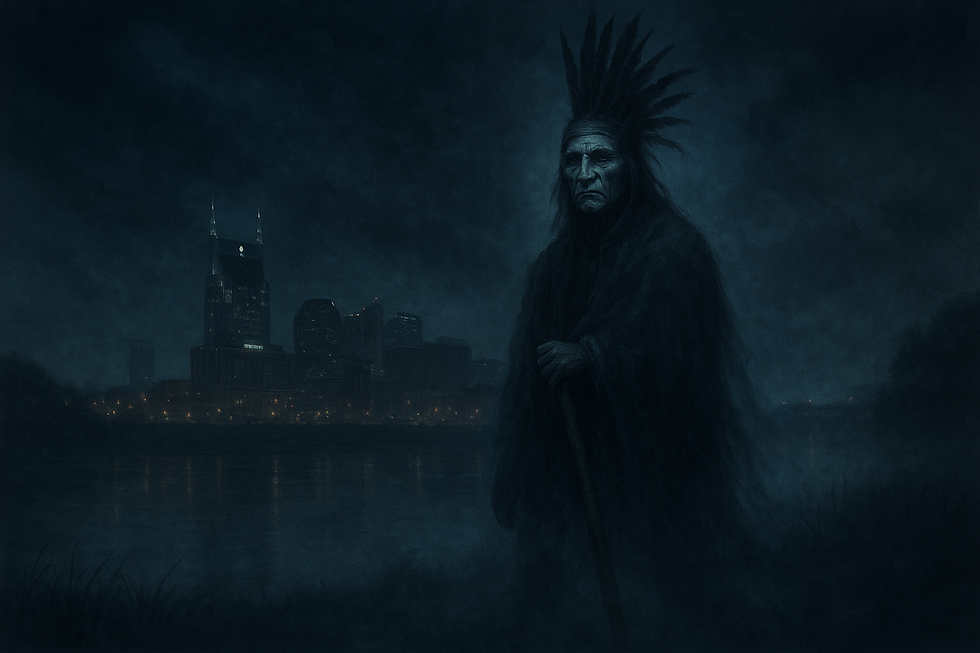
After concluding a prison term in 1967, Coe embarked on a music career in Nashville, living in a hearse, which he parked in front of the Ryman Auditorium while he performed on the street.
Let that sink in for a second.
This man showed up to Music City with nothing but a hearse to sleep in and enough nerve to busk on the sidewalk outside the most sacred venue in country music. He'd work himself into a sweat out there, then sign autographs for tourists as though he'd just come offstage. In a way, that move tells you everything about who David Allan Coe was — half hustle, half mythology, and completely, unapologetically himself.
He caught the attention of Shelby Singleton, owner of the independent label Plantation Records, and signed a contract. Nashville had noticed.
The Songs That Built Nashville's Outlaw Identity
Here's the thing about David Allan Coe that gets overlooked in all the talk about his image and his mythology. The man could write.
Not just write for himself — write for other people in ways that made them legends.
Coe wrote mainstream hits for Tanya Tucker and Johnny Paycheck. "Take This Job and Shove It" was entirely his creation. That single song became a blue-collar anthem that crossed every demographic line country music had. Truckers, factory workers, office employees who were just barely holding it together on a Monday morning — everyone claimed that song.
Tanya Tucker took his "Would You Lay With Me (In a Field of Stone)" to number one in 1973. She was seventeen years old when she recorded it. The combination of her raw voice and his raw songwriting stopped Nashville in its tracks.
And then there's "You Never Even Called Me by My Name." Written by Steve Goodman and John Prine — though Prine went uncredited for years — Coe turned it into one of the funniest, most self-aware country songs ever recorded. It's a song that simultaneously pokes fun at country music and perfects it. It was the ideal vehicle for Coe — a chance to both poke fun at and honor country music, doing spot-on impersonations of stars like Waylon Jennings and Merle Haggard, while weaving in his own mythologized legacy.
That's not easy to pull off. That's genius wrapped in denim.
The Outlaw Movement and Where David Allan Coe Fit In

The outlaw country movement of the 1970s is one of Nashville's defining cultural moments. Willie Nelson. Waylon Jennings. Kris Kristofferson. These were artists who pushed back hard against the polished, orchestrated Nashville Sound and demanded the right to make music on their own terms.
David Allan Coe was right in the middle of all of it — and also somehow on the outside of it at the same time.
Coe's rebellious attitude, wild image, and unconventional lifestyle set him apart from other country performers, both winning him legions of fans and hindering his mainstream success by alienating the music industry establishment.
He was an outlaw even among the outlaws. Waylon Jennings himself once pushed back on Coe publicly, but admitted there was something about the man that pulled at him. That tension — being respected and difficult simultaneously — was the engine of everything Coe created.
He was featured in Heartworn Highways, the acclaimed documentary about the outlaw country movement, in which he performs a concert at a Tennessee prison. There's something quietly powerful about that image — the man who came out of prison performing for the men still inside.
The Shel Silverstein Chapter (Yes, That Shel Silverstein)

This is where the story gets interesting, and a little uncomfortable — which, honestly, is on-brand for David Allan Coe.
Most people know Shel Silverstein as the poet who wrote Where the Sidewalk Ends and A Light in the Attic. What a lot of people don't know is that Silverstein was also a prolific, boundary-pushing songwriter who spent considerable time in Nashville writing for country artists.
While Coe lived in Key West, Shel Silverstein played him his comedy music album Freakin' at the Freakers Ball, spurring Coe to perform his own comedic songs for Silverstein, who encouraged Coe to record them. The result was two independently released albums — Nothing Sacred in 1978 and Underground Album in 1982 — that Coe sold through biker magazines and via mail order.
Those albums are not for the faint of heart. The songs drew fierce criticism for racist and deeply offensive content. Coe maintained throughout his life that they were meant as ribald satire, inspired by Silverstein's provocateur spirit. He told Billboard magazine in 2001 that Silverstein had convinced him to record the songs — something he had come to regret. "Those were meant to be sung around the campfire for bikers, and I still don't sing those songs in concert," he said.
They remain the most contested part of his legacy. A full accounting of David Allan Coe has to include them, even if it doesn't celebrate them.
The Ghost of Hank Williams and a Career Comeback
By the early 1980s, Coe was still an outsider to Music Row. Then came "The Ride."
The song tells the story of a hitchhiker picked up by the ghost of Hank Williams on a lonesome Tennessee highway. It hit the country Top 10 in 1983 and reminded Nashville — and everyone else — that Coe wasn't going anywhere.
Coe added an outro verse in which Hank praises the new class of country singers, from Waylon Jennings and Billy Joe Shaver to David Allan Coe himself. It's one of the most classic moves in his catalog: putting himself in a song alongside the legends and daring anyone to argue he didn't belong there.
What His Wife Said — And Why It Matters
Coe's wife, Kimberly Hastings Coe, told Rolling Stone: "One of the best singers, songwriters, and performers of our time — never to be forgotten. My husband, my friend, my confidant and my life for many years. I'll never forget him and I don't want anyone else to ever forget him either."
That's the thing about complicated people. The people closest to them see the whole person.
Nashville is full of complicated people. That's part of what makes it interesting. The city has always made room for the misfits, the outlaws, the ones who showed up in a hearse and said I'm going to make it here anyway.
David Allan Coe was the furthest thing from a polished Music Row product. He was the reason those products sounded more honest when they borrowed from his world.
The City He Chose — And That Chose Him Back
He wasn't from here. He was from Akron, Ohio, by way of a string of reformatories and prison cells. But Nashville was where he planted his flag, literally parking himself outside the Ryman and waiting for the city to pay attention.
Eventually, it did.

If you walk our Nashville walking tour, we pass by the Ryman. I usually stop there and mention that one of the most important things that ever happened on that block didn't happen inside the building. It happened on the sidewalk in front of it, with a man in a hearse and something to prove.
That's the Nashville David Allan Coe knew. Unforgiving, competitive, full of people who'd heard every story. But ultimately, a city that respects the real thing when it shows up.
He showed up. And he was the real thing... complicated edges and all.
If you want to walk the streets where outlaw country was born, where the honky-tonks first opened their doors to the artists Nashville hadn't decided what to do with yet, come find us. Our Nashville Adventures tours tell the full story... not the sanitized version, but the one with the rough edges still on it.
That's the kind of history David Allan Coe would've appreciated.
Rest easy, Mysterious Rhinestone Cowboy.