The Guitar History of Nashville: The Brands Behind Music City’s Sound

By: Trevor Caldwell
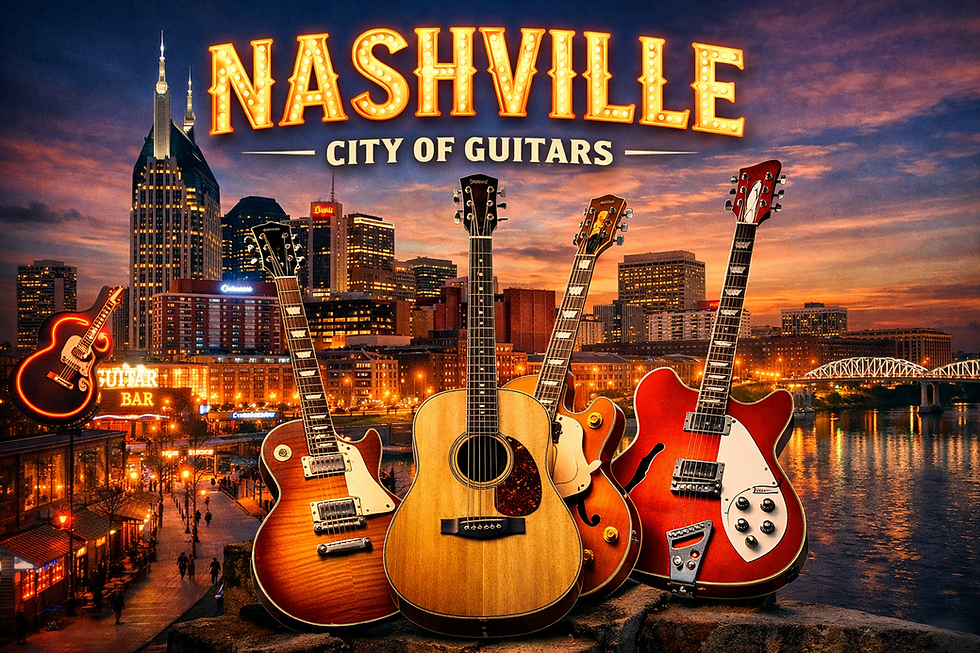
When people think of Nashville, they usually picture country music stars, honky-tonks on Broadway, and legendary songwriting. But beneath all of that is the instrument that truly shaped Music City’s sound: the guitar.
From the early days of radio broadcasts to modern studio sessions, Nashville’s musicians have relied on instruments built by some of the most iconic guitar brands in history. Companies like Gibson, Fender, Gretsch, Rickenbacker, and Martin helped define the tones heard on countless records made in Music City. Together, these brands didn’t just influence Nashville—they helped build its musical identity.
The Early Days: Acoustic Roots

Before electric guitars dominated the stage, Nashville’s sound was built around acoustic instruments. Early country musicians depended heavily on guitars from Martin, whose rich, resonant tone became the backbone of traditional country, bluegrass, and folk music.
Artists performing on the stage of the Grand Ole Opry often relied on Martin acoustics for their clarity and projection. The brand’s dreadnought-style guitars were particularly popular with performers who needed powerful rhythm accompaniment for vocals and fiddle-driven bands.
These early instruments helped shape the sound of Nashville long before electric guitars ever arrived.
The Electric Revolution

By the late 1940s and 1950s, Nashville musicians began experimenting with electric guitars in recording studios. One of the most influential models to emerge during this time was the Fender Telecaster, produced by Fender.
The Telecaster’s sharp, bright tone quickly became synonymous with country music. Its twangy sound cut through recordings and live performances, making it perfect for the emerging “Nashville Sound.” Many session players preferred it because it was durable, versatile, and incredibly expressive.
At the same time, guitars from Gretsch gained popularity among country and rockabilly players. Their hollow-body designs produced a warm, punchy tone that blended beautifully with Nashville’s evolving recording style.
Gibson Finds a Home in Nashville

While many guitar brands influenced the city’s sound, Gibson eventually became the brand most closely tied to Nashville itself.
Originally founded in Michigan, Gibson opened a major guitar manufacturing facility in Nashville in the 1970s. This move cemented a deep connection between the company and Music City.
Models like the Gibson Les Paul and Gibson ES-335 became staples in Nashville studios. Their thick sustain and warm tones offered a perfect contrast to the brighter sounds of Fender guitars, giving producers more sonic variety when crafting records.
Today, visitors can experience that history firsthand at the Gibson Garage Nashville, a massive showroom and music space celebrating the brand’s legacy.
Studio Musicians and the “Nashville Sound”

One of the biggest reasons guitar brands became so important to Nashville is the city’s famous recording culture. During the mid-20th century, elite session players—often referred to as the “Nashville A-Team”—recorded hundreds of hit songs each year.
Players like Brent Mason and Reggie Young mastered multiple guitars and tones. They could switch between Fender twang, Gibson warmth, or Gretsch punch depending on what a particular song needed.
This flexibility helped Nashville studios produce records that sounded polished, distinctive, and radio-ready.
Nashville’s Guitar History and Culture Today

Today, Nashville remains one of the most guitar-centric cities in the world. Walk into any studio, venue, or songwriter round and you’ll likely see instruments from Gibson, Fender, Gretsch, Rickenbacker, or Martin.
The influence of these brands extends far beyond country music. Rock, blues, Americana, and even pop artists in Nashville continue to rely on the tones that these legendary instruments provide.
In many ways, the story of Nashville isn’t just about the artists who wrote the songs—it’s also about the guitars that carried those songs around the world.

You'll be able to hear many tones from instruments like these as you walk down Broadway! Book a Nashville Walking Tour if you need a guide!


