The Real Story Behind Lower Broadway Nashville (What Most Tourists Never Hear)

Updated: Sep 12

If you've walked Lower Broadway Nashville on a Saturday night, you already know the noise. The lights. The wall of sound pouring out of every open door. What you probably don't know is what this street went through to get here — and why the version most people see today is only about half the story.
I've led hundreds of walking tours through this neighborhood. The history hiding in plain sight on this block still gets me every time.
Lower Broadway Wasn't Always a Party
Here's what the tourism brochures leave out. For most of the 20th century, Lower Broadway was considered the wrong end of town.
By the 1970s and into the 1980s, this street was rough. Genuinely rough. Pawn shops. Transient hotels. A few stubborn honky-tonks holding on because they had nowhere else to go. Robert's Western World — still standing right there on the strip — was a western wear store selling boots and jeans before it ever sold a beer.
The locals who remember that era don't call it "gritty" the way travel writers do now. They just called it what it was. A street that had seen better days.
The Honky-Tonks That Survived

Most of the bars you walk past today have been built or rebuilt in the last 20 years. Some in the last five. But a handful of the Nashville honky-tonks on Broadway carry real lineage, and that lineage matters.
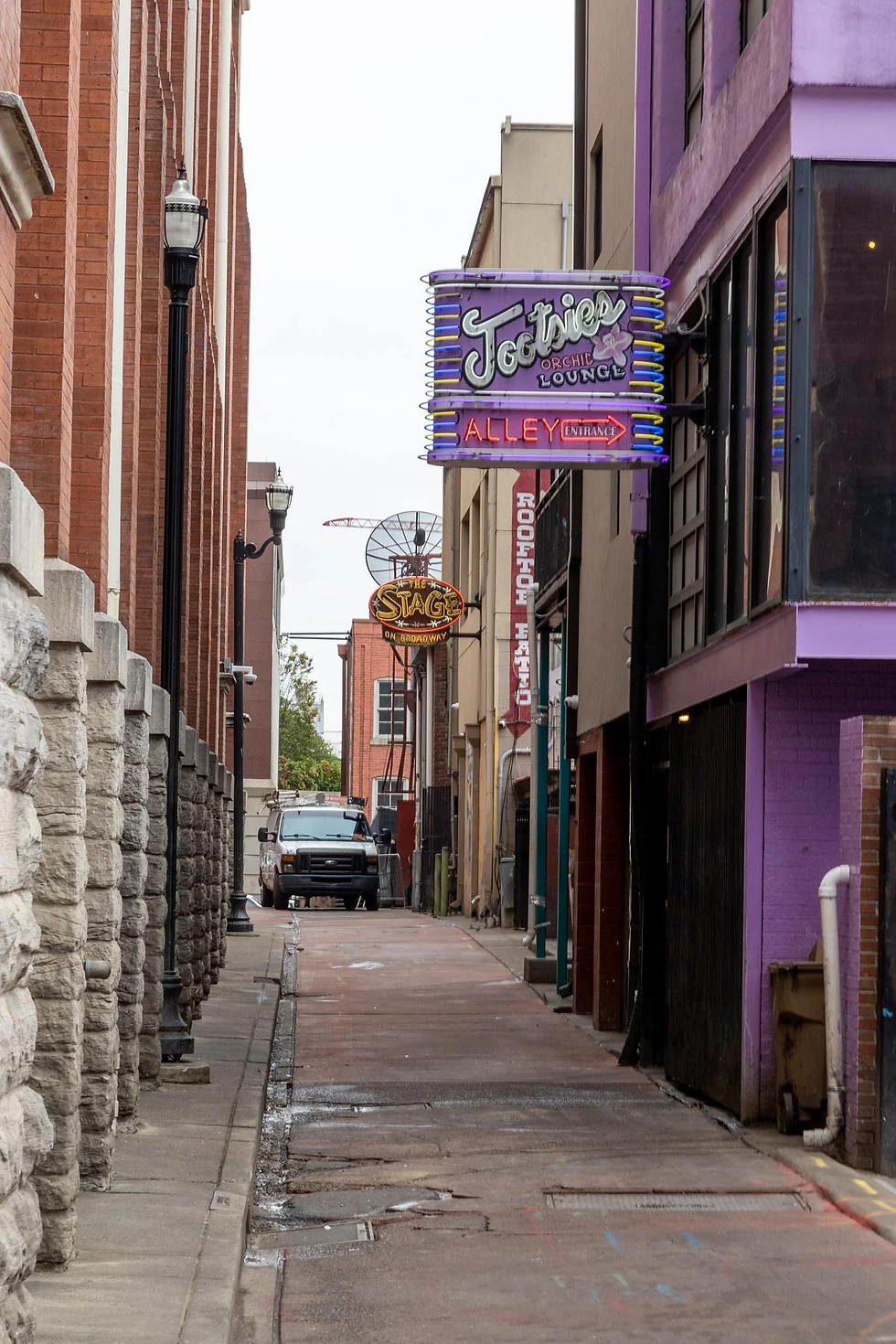
Tootsie's Orchid Lounge is the one everybody knows. The purple building. The alley that connected it directly to the backstage door of the old Ryman Auditorium. Willie Nelson used to slip out the back of the Ryman between sets and play Tootsie's for tips. Kris Kristofferson handed Tootsie herself a song he'd written, practically begging her to pass it to someone who could record it.
That song was "Help Me Make It Through the Night."
Tootsie didn't run a bar. She ran a lifeline. She extended credit to broke musicians, stored instruments behind the counter, and kept people fed when Nashville wasn't paying attention to them yet. According to historians at the Country Music Hall of Fame, she was as responsible for the careers of several major country artists as any record label in town.
What the Ryman Actually Means to Lower Broadway

You can't tell the story of Lower Broadway without walking up to Fifth Avenue and talking about the Ryman Auditorium. These two things are inseparable.
The Ryman opened in 1892 as a tabernacle. A revival house built by a riverboat captain named Thomas Ryman who had a religious experience at a tent meeting and decided he needed to build something worthy of the gospel.
It became the Grand Ole Opry's home in 1943. And for the next 31 years, every Saturday night, this end of Broadway was where country music happened. Not the glitzy version. The real version. Hank Williams played that stage. Patsy Cline. Johnny Cash. Bill Monroe, who more or less invented bluegrass music, played the Ryman more times than anyone ever bothered to count.
When the Opry moved to its new facility in 1974, a lot of people thought Lower Broadway would never recover.
They were almost right.
The Slow Resurrection of Lower Broadway in Nashville
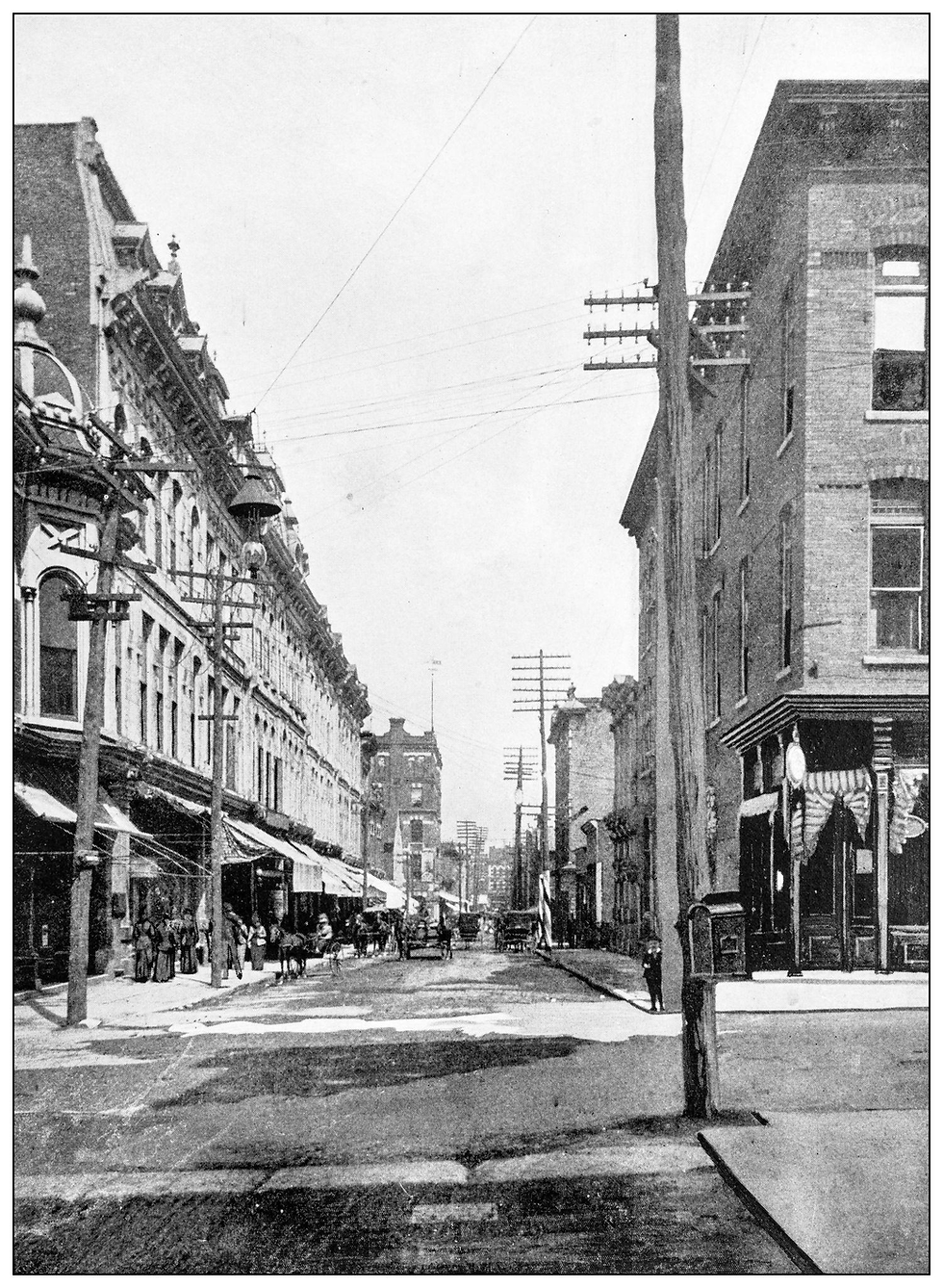
The turnaround didn't happen overnight. It didn't happen because of a master plan.
It happened because a few stubborn business owners stayed put, because Nashville started drawing more tourism in the 1990s, and because the Ryman was restored and reopened as a concert venue in 1994. That restoration changed everything. It told the rest of the street that the neighborhood had a future.
I think about that sometimes when I'm leading a Nashville walking tour down this block. Entire economies can pivot on one decision made by one institution to stick around instead of give up.
I saw something similar in the Peace Corps. I was stationed in Armenia, working in communities that had been written off by most of the outside world. The places that came back were the ones where a few people refused to leave. Broadway was like that.
What Tourists Miss When They Only See the Lights
Here's the thing about Lower Broadway Nashville today. It's genuinely fun. I'm not going to pretend otherwise. If you want cold beer and live music starting at 10 in the morning, this street will take care of you.
But if you only stay on the main drag and move bar to bar, you miss the layers.
A few things worth knowing before you walk it:
The alley behind Tootsie's once served as the literal connection point between the music industry's working class and its biggest stage. That alley is still there.
The architecture above the signs tells the real story. Look up at the second and third floors of these buildings. The bones of 19th-century commercial Nashville are still visible if you know what you're looking at.
The musicians playing inside are almost always better than the crowd is paying attention to. Stop for a set. Actually listen. That's what Tootsie always asked people to do.
The Street Is Still Writing Its Story

Lower Broadway is the most-visited block in Tennessee. According to Visit Music City, Nashville has drawn over 15 million visitors in recent years, and a significant share of them walk this street.
That kind of traffic changes a place. Some of it is good. Some of it is complicated. The honky-tonks that survived decades of neglect are now competing with five-story entertainment complexes built by national investors who've never been to a small-town county fair in their lives.
The soul of the street is still there. But you have to know where to look.
Come Find It With Us
If you want to hear the stories that don't fit on a historical marker, our Nashville Walking Tour spends real time on this block. We talk about Tootsie, the Ryman, the years Broadway almost didn't survive, and the characters who kept it alive through sheer stubbornness.
We stop on the sidewalk. We point at the buildings nobody looks at. And we tell you what was here before the neon.
That's the Lower Broadway Nashville worth knowing.


