Paramore's Start in Nashville (& the Hayley Williams Album That Looks Back at It)

Updated: Jul 10
By Briley Bell

Most people know Paramore as one of the best alt rock emo bands of the early 2000's. I don't blame them, as a die hard Paramore fan myself, I agree! But what they don't always know is that it started with a handful of homeschooled teenagers practicing after school in Franklin, TN, years before any of them had a record deal, a manager, or anything resembling a real plan. Paramore's start in Nashville, or more precisely the suburb just south of it, is a story worth knowing on its own.
A Thirteen-Year-Old Moves to Franklin
Hayley Williams was born in Meridian, Mississippi, but her path to Tennessee started with her parents' divorce in 2002. She was thirteen when her mother moved them to Franklin, just south of Nashville, and according to Williams, the moment they crossed the state line felt like the beginning of an entirely new life. She didn't know it yet, but that move put her right in the middle of a music scene that was about to shape her entire future.
At her new school, a weekly program for homeschooled kids, she met two brothers, Josh and Zac Farro. Josh played guitar and could already write riffs that sounded like something a professional musician would play, and Zac, only twelve at the time, sat behind the drum kit. He was young enough that when bassist Jeremy Davis later showed up to practice and found out the drummer was a literal middle schooler, he assumed the whole thing was a waste of his afternoon. That doubt didn't last long though. Davis has said that first practice session was enough to convince him the band was onto something real. Hayley met Jeremy a different way entirely, by trying out for a local funk cover band called The Factory. Around the same time, she started taking vocal lessons with a Franklin coach named Brett Manning, owner of Singing Success.
(Shoutout to my vocal coach Chanelle over there, you rock!)
By 2004, those scattered connections had become an actual band, though for a while they didn't have a name to go with it. They borrowed one from the maiden name of a former bandmate's mother, a woman named Paramore who had nothing to do with music but apparently had a name worth stealing. It wasn't until later that the band realized what they'd landed on was a near-homophone for "paramour," the word for a secret lover. Rather than worry about the mixed signals, they leaned into the spelling and kept it.
Building a Name, One Small Stage at a Time

Like just about every ambitious rock band in Middle Tennessee, Paramore learned by playing anywhere that would have them. They became staples in the local all-ages scene, loading gear into local venues, opening for touring acts, and slowly building a reputation through word of mouth rather than radio play. One of their most notable launching pads was The End in Nashville, a dive bar where countless local rock bands go to perform. The room held only a few hundred people, but for a teenage band it felt enormous. They also played venues like Rocketown, Exit/In, and whatever DIY spaces or church-sponsored all-ages shows they could play at.
The Nashville scene in the early 2000s was tightly connected; the same fans would show up every weekend, and a good performance could quickly turn strangers into regulars. Before they ever had a hit single, Paramore had already developed the explosive live energy that would become their trademark.
From Franklin Practices to a Major Label Deal
Before Paramore existed as a band, Hayley had already been spotted by managers and signed to a development deal at fourteen. She was writing pop songs around Nashville at the time, the kind of thing a young, talented kid does when industry people start paying attention early.
When Atlantic Records got involved, their plan was simple and fairly typical for the industry: push Hayley as a solo artist and build everything around her. She said no. She wanted her friends from Franklin in the band with her, not a backing track and a spotlight. Eventually Atlantic agreed to an unusual workaround, signing Hayley directly to the label while having the rest of the band sign separately to a smaller, cooler imprint called Fueled by Ramen.
Paramore released their debut album, All We Know Is Falling, in 2005, when Hayley was only sixteen years old, an age where most of her peers were worrying about a driver's permit, not a record deal. The album was recorded in just a few weeks, a whirlwind that barely gave the band time to process that their after-school practices had finally turned into a real music career.
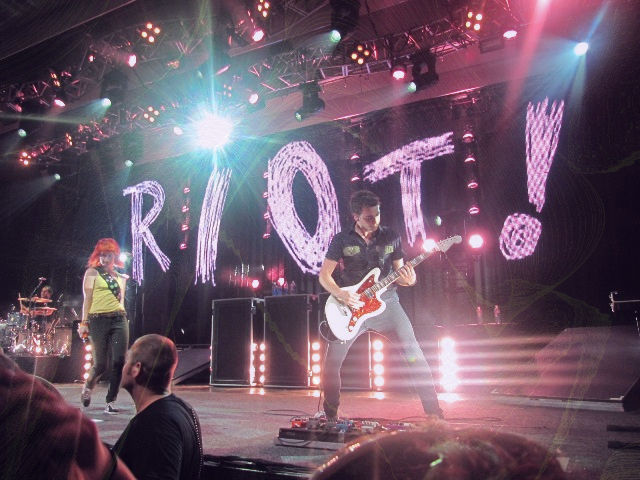
What followed is the kind of trajectory you don't see very often out of a Nashville suburb. Riot! turned them into a platinum-selling act in 2007, driven by singles that are still in regular rotation almost two decades later. Brand New Eyes hit number two on the Billboard 200 in 2009. By the time their self-titled 2013 album dropped, Paramore had won a Grammy for Best Rock Song with "Ain't It Fun" in 2015, and won both Best Rock Album and Best Alternative Music Performance with This Is Why in 2024.
Paramore: a Band That Kept Almost Falling Apart
Here's the part that doesn't usually make it into the highlight reel. Paramore's lineup has been in motion since the day it formed, and more than once the whole project nearly didn't survive it. Jeremy Davis left briefly back in 2004, only months after the band started, before returning the next year. Rhythm guitar turned over just as fast in those early years, from Hayley Williams' neighbor Jason Bynum to Hunter Lamb, who left in 2007 after getting married. Taylor York stepped into that spot the same year, the one new addition who actually stuck.
The bigger blow came in December 2010, when Josh and Zac Farro both exited the band at once. Josh later wrote a blog post accusing Atlantic Records and Williams' family of treating the group as a "manufactured product," riding what he called "Hayley's dream" rather than a real band. It was messy, it was public, and for a while it looked like that might be the end of Paramore.
Then came round two. Jeremy Davis left again in December 2015, this time for good, leaving Hayley Williams and Taylor York as the only two remaining members. Three months later, Davis sued them both, claiming he'd been cut out of songwriting credits on the band's 2013 self-titled album and that he was owed a share of touring and merchandising revenue as a business partner, not just an employee. The case ran through Nashville's Chancery Court and a parallel federal suit before both sides reached a settlement in 2017, the day before the band released their next album, After Laughter.
Through all of it, Hayley herself drifted in and out of the spotlight more than once. She quietly stepped away from the band in 2016 during the lawsuit's worst stretch, and it was Taylor York who eventually talked her back into it. Zac Farro returned that same year the lawsuit closed, turning a trio that had been written off more than once into a group that kept making records anyway.
Looking Back at Nashville From the Outside
In 2025, Hayley released her third solo album, Ego Death At A Bachelorette Party, her first project as a fully independent artist following her split from Atlantic Records in 2023, more than two decades after that original teenage contract. She self-released it under her own imprint, Post Atlantic, a name that doesn't bother hiding what it's referencing. Rather than building toward a traditional album rollout, she dropped most of the tracks individually online first, before compiling everything into a full release that August.
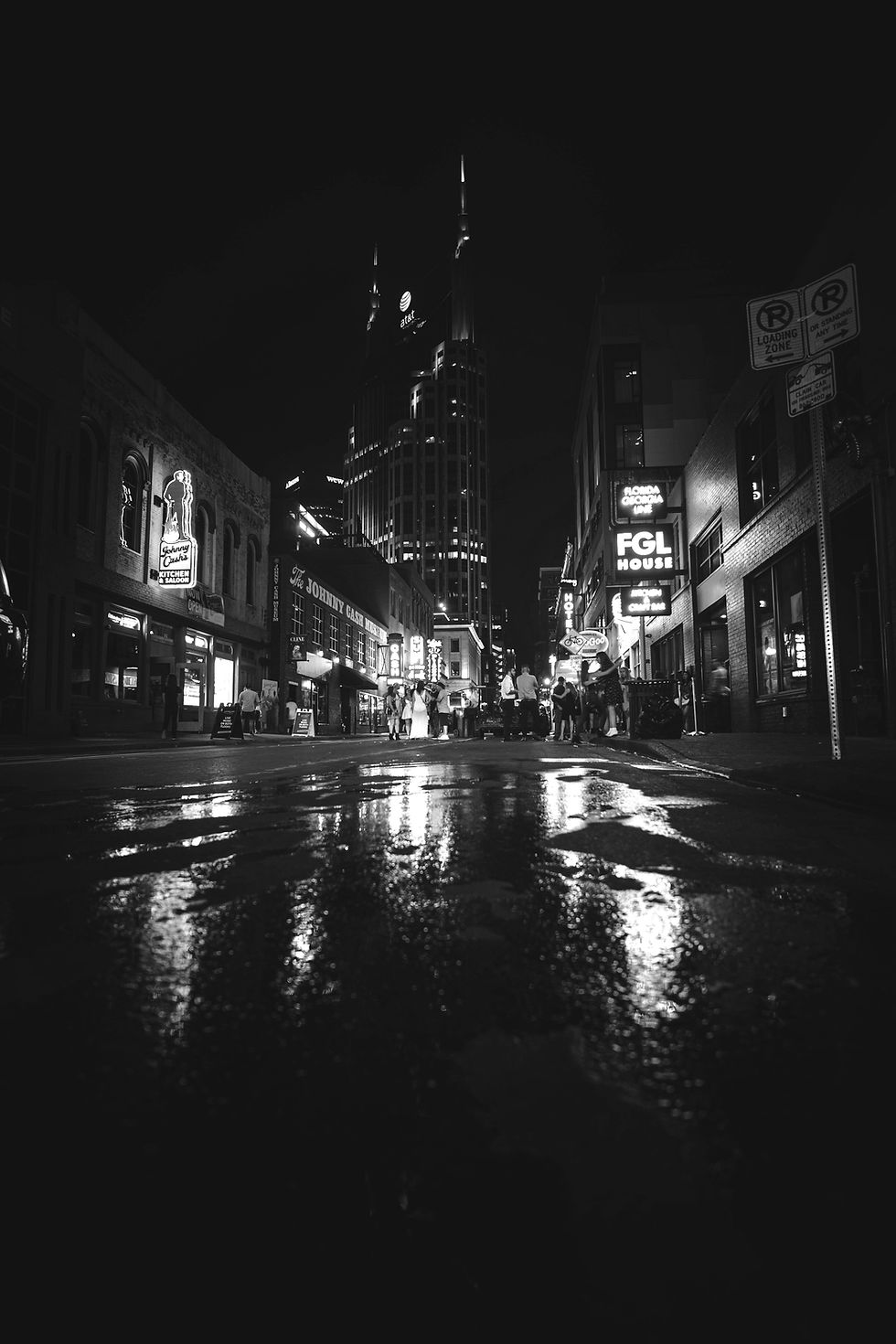
The title track is where Nashville shows up most directly, and it's not subtle about it. The song's video was filmed right here in the city, weaving through bars that feel pulled straight off a real Saturday night downtown, and it even features a cameo from Tennessee state representative Justin Jones. The lyrics wander through different versions of the same bar, a country singer's bar, a bachelorette party bar, a karaoke bar, treating Nashville's nightlife scene as a kind of repeating stage set, the same spotlight handed off from
one identical room to the next like nobody can tell the difference anymore.
She isn't done with the city after that one song, either. On "True Believer," Hayley turns a more critical eye toward what's happened to the South she grew up in, singing about chain restaurants built on top of former music venues and gift shops crowding into old church lobbies, a quiet eulogy for the version of Nashville that existed before so much of it got sold off and rebuilt. It's less angry than it is mournful, holding onto a place even while naming exactly what's been lost.
Jones later described the song as a way of lifting up the version of Nashville that includes and welcomes the people who actually live here and love this city despite its flaws, not just the version built for a long weekend of karaoke and cowboy boots. Broadway gets the postcard treatment, the neon lights, and the bachelorette party buses. The Nashville Hayley grew up in, the one full of after-school band practices, teenage ambition, and the small communities hidden in the suburbs, rarely gets the same spotlight, even though it's the version that actually built her.
Same Block, Different Song
Nashville has a way of writing itself into people's stories whether they planned on it or not. Whether they're sixteen and signing their first record deal, or in their thirties and finally independent enough to say exactly what they think about the place that made them famous. Twenty years after a handful of teenagers started practicing in a living room, the city is still showing up in the music, just with a lot more to say about it now. We love telling the stories of Tennessee's history, local legends, and the threads connecting Nashville's past to what's still being made here today. Come on a walking tour to hear more of Nashville's best stories.
You can find us at Nashville Adventures.


Briley Bell is the kind of person Nashville produces once in a while. By night, she leads Nashville Adventures' ghost tours through the city's haunted corners, spinning stories of Civil War soldiers, restless spirits, and the kind of history that doesn't stay buried. By day, she's a musician and audio engineer with a sound that's all her own, the sort of Nashville artist who actually earns that title. Her music has the same quality as her storytelling: it pulls you in, holds you still, and leaves you thinking about it longer than you expected. Check out her music and follow her socials: Click Here