Nashville History Before Country Music: It Was a City Before It Was a Genre

Updated: Sep 12

There's a moment on almost every tour when somebody asks me how long Nashville has been "Music City." And I love that question. Because the honest answer is: not that long, actually. Nashville had already been a capital city, a university town, a Civil War battlefield, a river trading hub, and the "Athens of the South" long before the first guitar chord ever echoed out of a honky tonk on Broadway. The city's story doesn't start with country music. It just gets told that way.
Founded by People Who Had No Business Surviving

Nashville got its start in the winter of 1779, and it was not a gentle beginning.
James Robertson led a party of settlers overland through brutal cold to a bluff above the Cumberland River. John Donelson followed months later by flatboat, navigating hostile territory with a group that included women, children, and enslaved people. They arrived in April 1780 at what they called Fort Nashborough, named in honor of General Francis Nash, a Revolutionary War officer from North Carolina who had died at the Battle of Germantown two years earlier.
These were not people looking to build a music scene. They were trying to survive the winter.
By 1806, Nashville was incorporated as a city. By 1843, it was the permanent state capital of Tennessee. The Cumberland River made it a serious trading and commercial center for the entire mid-South region. Merchants, lawyers, politicians, and educators were shaping this place decades before anyone thought to put a radio microphone in front of a fiddle player.
That context matters. Nashville had a whole life before it had a soundtrack.
The Athens of the South (And They Meant It)

Here is something that surprises people when I mention it on tours. Nashville's nickname "the Athens of the South" is not a recent marketing slogan. It was already in common use by the mid-1800s, and it had nothing to do with music. It referred to the remarkable concentration of universities, seminaries, and intellectual institutions that had taken root here.
Fisk University opened in 1866, founded specifically to educate formerly enslaved people after the Civil War. Vanderbilt University followed in 1873. Meharry Medical College, the country's oldest historically Black medical school, opened in 1876. The list goes on.
And then in 1897, for the Tennessee Centennial Exposition, the city built a full-scale replica of the Parthenon in Centennial Park. Not a symbol of music. A symbol of classical civilization. They were dead serious about that Athens comparison.
According to the Tennessee Encyclopedia, maintained by the Tennessee Historical Society, Nashville's academic identity was firmly established long before the entertainment industry arrived. The city had already defined itself through education, religion, and commerce. Music came later, and it came almost by accident.
The Fisk Jubilee Singers Changed Music History. Most People Can't Name Them.

If you want to talk about Nashville's real musical legacy, you have to start here. Not with the Grand Ole Opry. Not with Hank Williams. With the Fisk Jubilee Singers, who left Nashville in 1871 on a fundraising tour and ended up changing the course of American music.
The Fisk Jubilee Singers were a group of students, many of them formerly enslaved, who performed African American spirituals for audiences across the United States and then Europe. Queen Victoria reportedly wept when she heard them perform. They sang before packed concert halls in England and Germany when Nashville was still rebuilding from the Civil War.
They introduced the world to a form of music rooted in suffering, faith, and survival. Music that would eventually branch into gospel, blues, soul, and yes, country. The DNA runs deep. They just don't get enough credit for it.
Fisk University's archives document this history in detail, and it is worth your time if you want to understand where American music actually comes from.
A City Occupied, Rebuilt, and Hardened
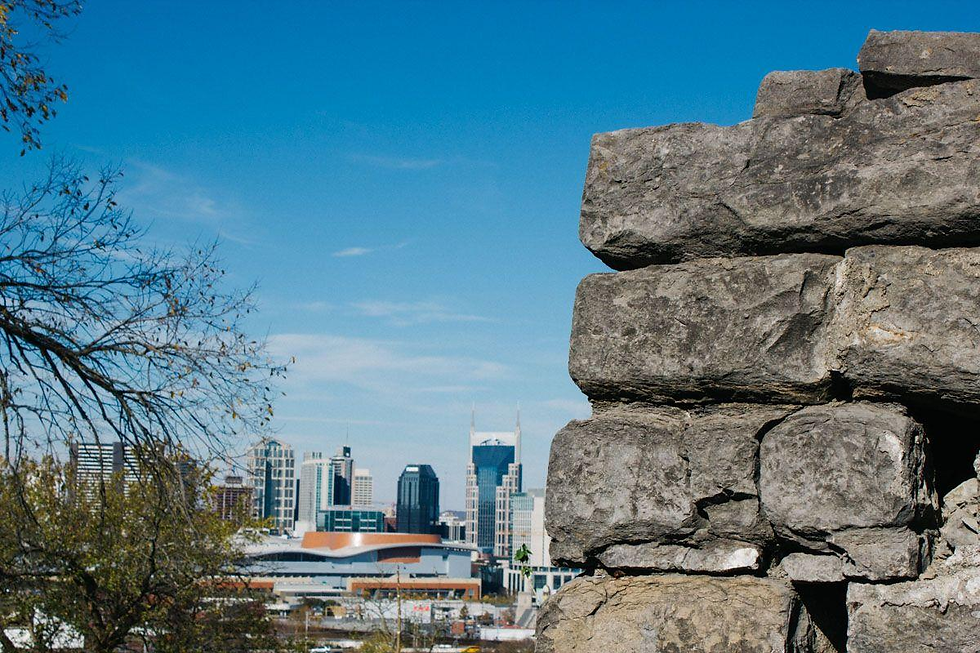
Before Nashville became a music destination, it became a war zone.
On February 25, 1862, Nashville fell to Union forces, becoming the first Confederate state capital captured during the Civil War. It happened faster than almost anyone expected. Confederate forces retreated. The Union Army moved in. And Nashville spent the rest of the war as a major Union supply and logistics hub, with tens of thousands of soldiers moving through the city.
Fort Negley, built by the Union Army using forced labor from the city's Black population, still stands on a hill south of downtown. It's one of the largest inland stone forts built during the war. When I take people up there on tours and they look out over the skyline, the city looks completely different. You can almost feel the weight of what happened here.
The Battle of Nashville in December 1864 was one of the most decisive Union victories of the entire war. Two days of hard fighting. The Confederate Army of Tennessee was essentially destroyed as a fighting force. Thousands of men buried in this soil.
Nashville rebuilt from all of that. It rebuilt fast, and it rebuilt tough. The resilience baked into this city's character did not come from a song. It came from everything that happened before the songs.
The Ryman Was a Church Before It Was a Concert Hall

People are genuinely surprised when I tell them the Ryman Auditorium was not built for music.
Sam Jones was a fiery Methodist revivalist preacher, and in 1885 he held a series of tent revivals in Nashville that reportedly converted a riverboat captain named Thomas Ryman. Ryman was so moved that he funded the construction of a Union Gospel Tabernacle, completed in 1892, specifically to give Jones a permanent home for his revivals.
That building became the Ryman Auditorium. The Grand Ole Opry moved in decades later, in 1943, because the building had outstanding acoustics and a lot of seats. But when those walls went up, nobody was thinking about country music. They were thinking about salvation.
That is Nashville in a sentence, honestly. Things built for one purpose end up meaning something completely different. The city keeps doing that.
[SUGGESTED IMAGE: Ryman Auditorium exterior brick facade, Nashville, daytime] Alt text: Historic Ryman Auditorium exterior Nashville Tennessee, originally built as Union Gospel Tabernacle in 1892
Country Music Arrived. Then It Took Over.

The Grand Ole Opry launched as a radio barn dance on WSM in November 1925. It was popular almost immediately, and over the following decades Nashville became the undisputed home of country music recording, publishing, and performance. The music took hold and it never let go.
That part of the story is real and it matters. Country music is woven into this city's identity in a way that goes beyond tourism. Walk into a bar on Broadway on a Tuesday afternoon and somebody is playing their heart out for a room of twenty people. The music is genuine here. I am not trying to argue otherwise.
But the music is one chapter. Not the whole book.
Nashville is a city of soldiers, preachers, scholars, freed people building institutions from nothing, and river traders who kept commerce moving through war and flood and reconstruction. That history is in the streets and the stones. Most people walking through downtown have no idea it's there.
That is exactly why I do what I do.
Come Hear the Whole Story
If the version of Nashville you know starts with the Opry or ends at Broadway, you are missing most of the story. The Nashville Adventures walking tour covers the history that does not fit on a bar napkin. The Civil War. The Reconstruction. The scholars and the preachers and the musicians who came before country music had a name.
It is all here. You just need someone to point it out.


