Nashville's Civil War History: Why Seeing It in Person Changes Everything

Stand at the corner of Broadway and 4th on any given afternoon and you'll hear honky tonks cranking up before noon. You might catch the smell of bourbon drifting down from a rooftop bar. What you probably won't notice is that you're standing on the edge of what was once one of the most strategically vital Union supply bases in all of North America.
That contrast is exactly the point.
Nashville's Civil War history doesn't announce itself. It hides inside city blocks, underneath parking lots, in the bones of a few surviving buildings and the contours of hills most people drive past without a second thought. But once you know where to look, this city becomes a completely different place to walk through.
Nashville Fell First
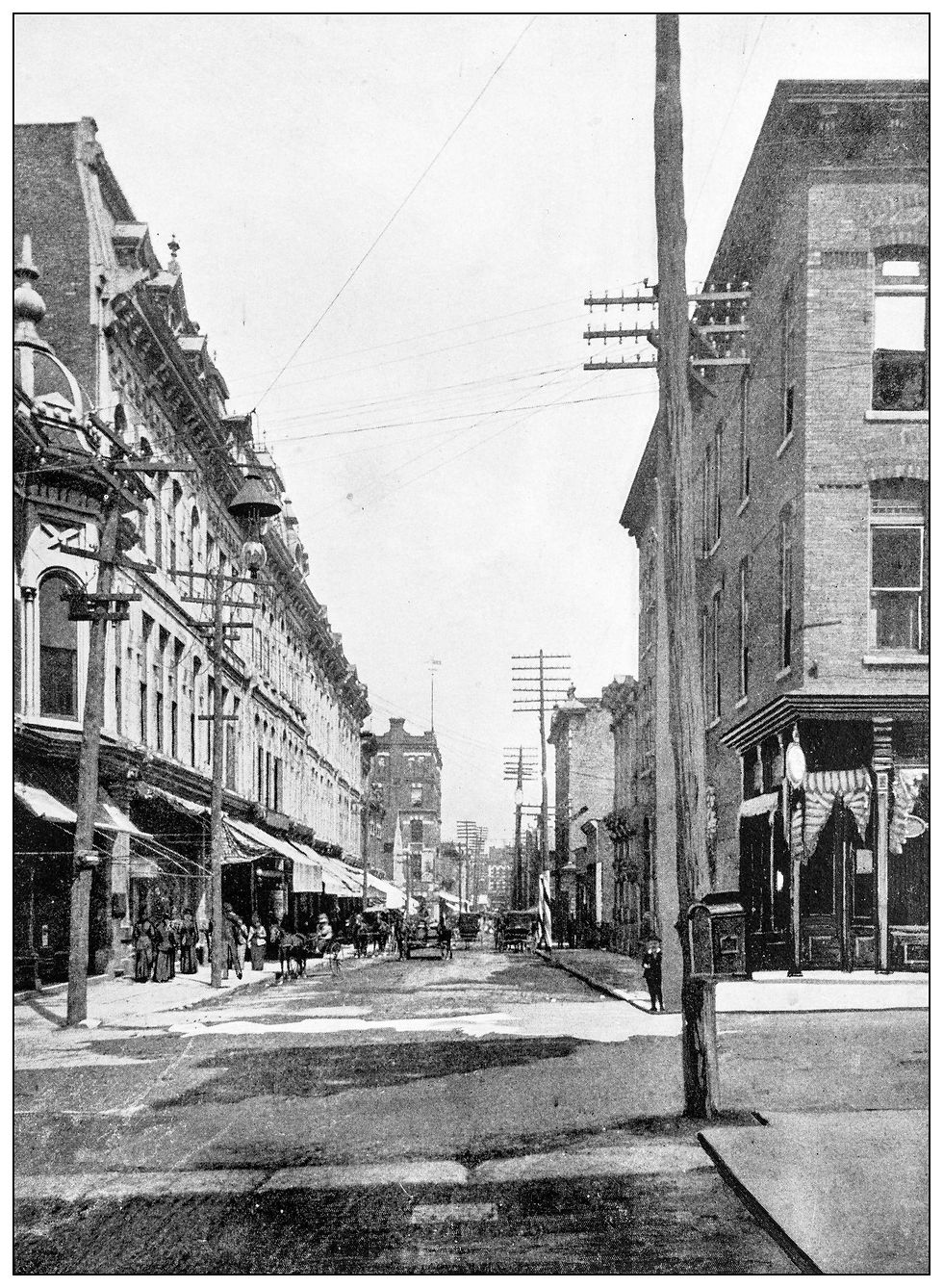
February 25, 1862. Nashville became the first Confederate state capital to fall to Union forces. No dramatic last stand. No siege. The Confederate government packed up and left, the mayor surrendered the city, and within days Yankee soldiers were walking these same streets.
The Confederates expected Nashville to be a symbol. The Union turned it into something more useful: a machine.
Nashville sat at the confluence of the Cumberland River and two critical railroad lines. That geography made it the most strategically valuable city in the entire Western theater. Within months, warehouses packed with ammunition, food, horses, and medical supplies had turned this city into the logistical backbone of the Union's entire push into the Deep South. The war wasn't just fought near Nashville. For three years, the war was fed from Nashville.
The Fortification of Nashville — and Who Built It
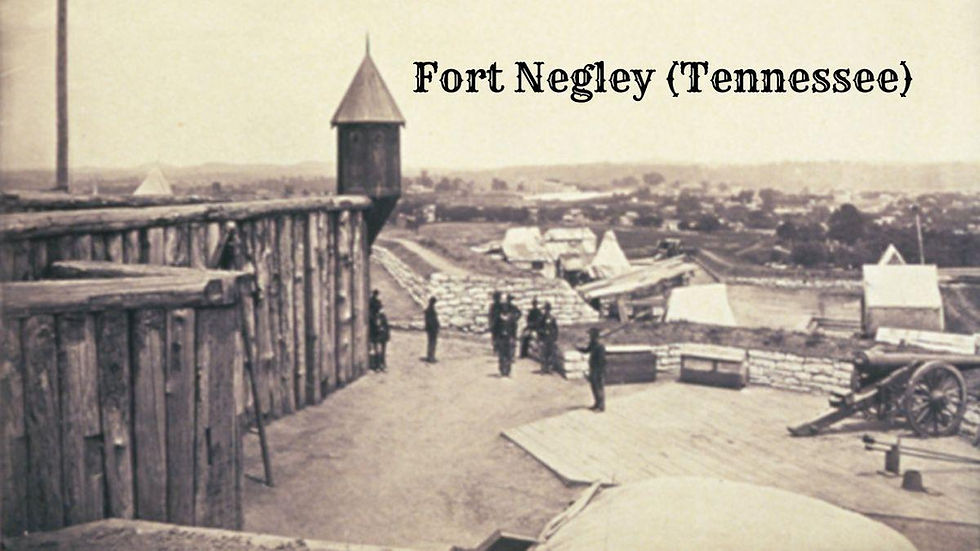
If you haven't been to Fort Negley on St. Cloud Hill, stop reading this and go. It's one of those places that changes your understanding of a city you thought you already knew.
Construction began in 1862. What they built was the largest inland masonry fortification in North America. When finished, Nashville ranked second only to Washington, D.C. as the most fortified city on the continent. Miles of trenches. Heavy artillery on every ridge. The Cumberland River patrolled by Union gunboats.
Here's what gets left out of a lot of Civil War accounts: much of Fort Negley was built with Black labor. Enslaved people, freedmen, and contrabands who had fled to Union lines were pressed into service alongside hired workers. Thousands of Black Nashvillians laid those stones — building the very fortifications that would help destroy the institution that had held them in bondage.
That is not a footnote. That is the story.
I spent time in uniform. I know what it means to hold a fortified position, to trust that the ground beneath you will hold. When I stand at Fort Negley and think about the men who built it, many of them with no guarantee of what came next for them or their families, I feel something that no textbook ever quite captured for me. The weight of it is real in a way that only shows up when you're actually standing there.
Hood Came North
By late 1864, the Confederacy was desperate. General John Bell Hood decided to take his Army of Tennessee and march north. His logic was audacious to the point of recklessness: if he could reclaim Nashville, he could force General Sherman to abandon Georgia and come back to deal with him. Prolong the war. Change the outcome. It was a long shot built on a lot of prayers.
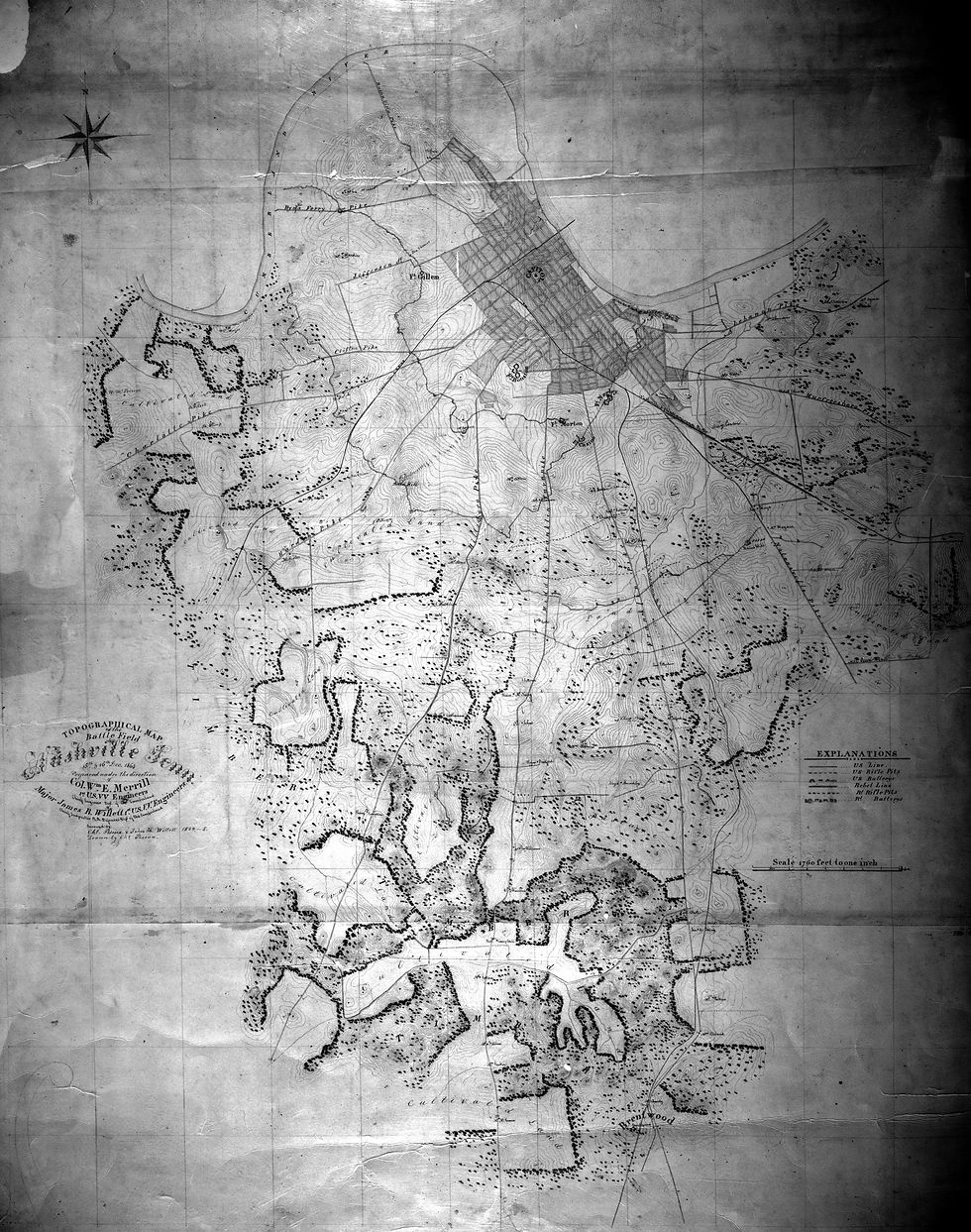
Hood arrived at Nashville's southern outskirts on December 2 after being savaged at the Battle of Franklin on November 30 — five of the bloodiest hours of the entire war. Nearly 7,000 Confederate casualties in a single afternoon. He pressed on anyway. He set up his lines south of the city. And then he waited.
The Battle That Ended the War in the West
Union General George Thomas was a Virginian who had stayed loyal to the Union. His men called him the "Rock of Chickamauga." President Lincoln and General Grant were firing urgent telegrams at him daily, some bordering on threats: strike now, or else.
Thomas didn't budge. He was waiting on his cavalry. Waiting on the ice to thaw. Waiting until he was positioned to finish this thing completely rather than just push Hood back. Grant was literally on his way to Nashville to relieve Thomas of command when the message arrived: Thomas had moved.
On December 15 and 16, 1864, Thomas hit Hood's army with one of the most methodical, complete assaults of the entire Civil War. As the American Battlefield Trust documents in their full Battle of Nashville overview, the result was the near-total destruction of the Confederate Army of Tennessee. In roughly six months of campaigning, Hood's force lost nearly 75% of its fighting strength. He resigned his commission in January 1865. The war in Tennessee was over.
Most serious military historians rank Nashville among the most decisive Union victories of the entire war. Not Gettysburg. Not Antietam. Nashville. And yet most of the people visiting this city have no idea.
What It Actually Feels Like to Stand Here
This is what I've learned from years of leading people through this city: there is a difference between knowing history and standing inside it.
I can tell you the Battle of Nashville produced roughly 9,000 total casualties over two days. I can tell you Hood's shattered army stumbled back south with Thomas in pursuit, the Army of Tennessee reduced to a ghost of what it had been. Those are facts. Good facts.
But facts don't tell you what it feels like to stand on the ridge line where Hood's men dug their cold, desperate trenches in December 1864 and look north at the city they'd come so far to reclaim. They don't tell you what it feels like to stand at Fort Negley and understand that the stones beneath your feet were placed by men fighting for their own liberation in the most literal sense possible.
Nashville's Civil War story is not only a military history. It's a story about logistics and power, about race and sacrifice, about a nation tearing itself apart and the people who lived through it on these exact streets, on these hills, in these neighborhoods. The Civil War years changed what Nashville was and set the trajectory for everything that came after — including Fisk University, founded in 1866 to educate the formerly enslaved, which still stands today less than two miles from the Capitol.
That kind of depth doesn't fit on a historical marker. You need someone to walk it with you.
Seeing Nashville's Civil War History the Right Way
Two deployments taught me that geography shapes everything in a fight. Terrain, sight lines, supply routes — these aren't abstract concepts when you've lived them. Walking Civil War sites in Nashville with that background changes what I notice, and it changes what I'm able to share with the people who join our tours.
Our Nashville Civil War Tour is built around exactly that kind of ground-level understanding. We walk the sites. We talk about the strategy and the human cost together, because neither one makes full sense without the other. We connect what happened here in 1864 to the city you're walking through today.
Nashville's Civil War history is hiding in plain sight. All you need is someone to help you see it.


