Is Nashville Walkable? A Local Guide to Getting Around Music City

By Paul Whitten, Founder of Nashville Adventures

Here is the honest answer up front: Nashville is very walkable if you stay in the downtown core, and not very walkable once you leave it. Downtown, the honky tonks, the Ryman, the river, and the stadium are all within an easy stroll of each other, but greater Nashville is a spread-out, car-shaped city. I walk this downtown for a living, so let me save you some blisters and some bad assumptions.
Is Nashville Walkable for Tourists? The Real Answer
For most visitors, yes, Nashville is walkable, because almost everything you came to see sits inside a compact downtown grid you can cross on foot in about twenty minutes. Lower Broadway, the Ryman Auditorium, Printer's Alley, the Country Music Hall of Fame, the riverfront, and Nissan Stadium across the water are all walkable from one another.
The trick is knowing where that walkable bubble ends. Downtown Nashville is dense, flat enough, and packed with sidewalks. But the neighborhoods tourists also love, East Nashville, the Gulch, 12 South, Germantown, Music Row, are each their own little pocket, separated by stretches that nobody walks on purpose. Inside a pocket you are fine on foot. Getting between pockets, you will want a rideshare, a scooter, or a bus.
So when someone asks me if they need a car for a Nashville trip, I ask where they are staying. Downtown? Leave the car at the hotel. Anywhere else? You will want wheels of some kind.
The Walkable Core: What You Can Reach on Foot Downtown
Downtown Nashville is the most walkable square mile in the state, and you can build an entire trip without ever starting a car. From the middle of Lower Broadway you are within a ten to fifteen minute walk of nearly every marquee stop.
Lower Broadway, the neon honky tonk strip, is the heart of it, and it is entirely a walking street in spirit.
The Ryman Auditorium sits one block north of Broadway, an easy two minute walk.
The Country Music Hall of Fame and the Music City Center are a few blocks south.
The riverfront and First Horizon Park are a short walk east toward the Cumberland.
The John Seigenthaler Pedestrian Bridge carries you across the river to the stadium side entirely on foot.
That last one is worth planning around. The Seigenthaler bridge spans 3,150 feet and is one of the longest pedestrian bridges in the world, per Wikipedia. It started life as a car bridge back in 1909, got closed to traffic in 1998, and was reborn as a walkway, then renamed for the newspaperman John Seigenthaler in 2014. Walk it at sunset and you will see why locals propose on it.
Where Nashville Stops Being Walkable
Be clear-eyed about this: outside the downtown core, Nashville is a car city, and trying to walk long distances between neighborhoods will eat your day. The metro area sprawls across hills and highways that were built for driving, not strolling, and the sidewalks thin out fast once you leave the center.
East Nashville is a lovely walk once you are in it, but the walk there from downtown crosses the river and some unlovely blocks. The Gulch and 12 South are walkable bubbles of their own, a rideshare apart. Music Row, where the record labels live, is a pleasant stroll but a genuine mile-plus from Broadway. None of this is a knock on the city. It is just the truth that keeps a visitor from booking a hotel in the wrong spot and spending the trip annoyed.
My local rule of thumb: pick a downtown hotel if walking is your plan, and budget a rideshare for anything in a different neighborhood. It is cheaper than a rental car and parking, which downtown will punish you for.

Getting Around Nashville Without a Car
If you skip the rental, Nashville gives you a handful of solid ways to move, and they cover most tourist needs without a steering wheel. Between your own two feet, rideshares, scooters, and public transit, you can run a whole trip car-free.
Walking handles the entire downtown core, which is most of what you came for.
Rideshares (Uber and Lyft) are everywhere downtown and are the easiest hop between neighborhoods.
Public transit runs through WeGo, Nashville's transit agency, which operates 27 local bus routes out of its downtown hub, the Elizabeth Duff Transit Center at WeGo Central, per Wikipedia.
The WeGo Star commuter rail runs 32 miles east from downtown out to Lebanon if you want a day trip by train (per Wikipedia).
Coming straight from the airport, you have a cheap option a lot of visitors miss. WeGo Route 18 connects Nashville International Airport to the downtown transit center for two dollars each way, with express trips running about twenty minutes, per WeGo Public Transit. That is a fraction of a downtown rideshare at peak times.
Is Nashville Walkable at Night and in Bad Weather?
Downtown Nashville is walkable and well-trafficked at night, especially the Broadway corridor, which stays busy and lit well past midnight. The main tourist streets are rarely empty, which is its own kind of safety, though like any downtown you keep your wits about you and stick to the busy blocks after dark.
Weather is the bigger wildcard. Nashville summers are hot and sticky, and July on Broadway without shade is a test of character, so I tell people to walk mornings and evenings and duck inside midday. Winters are mild but can turn raw, and the occasional ice storm shuts the sidewalks down entirely. Spring and fall are the walking seasons, and if you are timing a trip around comfortable feet, our guide to the best time to visit Nashville breaks down the trade-offs month by month.
Frequently Asked Questions
Is Nashville a walkable city?
Downtown Nashville is very walkable, with Broadway, the Ryman, the Country Music Hall of Fame, and the riverfront all within an easy walk of each other. The greater metro area, though, is car-dependent and spread out. Stay downtown and you can run most of a trip entirely on foot.
Do I need a car in Nashville?
If you are staying downtown and plan to see the main sights, you do not need a car, and parking downtown is expensive anyway. If you want to explore outlying neighborhoods like East Nashville, 12 South, or the Gulch, use rideshares or transit rather than renting, unless you are taking day trips out of the city.
How do you get from the Nashville airport to downtown?
The cheapest option is WeGo Route 18, which runs between Nashville International Airport and the downtown transit center for two dollars each way, with express trips taking about twenty minutes. Rideshares and taxis also serve the airport and cost more, especially during busy events and peak travel times.
Can you walk from downtown Nashville to East Nashville?
You can, but most locals would not. It means crossing the Cumberland River and walking through some blocks that are not scenic or pedestrian-friendly. The John Seigenthaler Pedestrian Bridge gets you across the river on foot toward the stadium, but for East Nashville's restaurants and bars, grab a quick rideshare.
Is downtown Nashville safe to walk at night?
The main downtown tourist areas, especially Lower Broadway, stay busy and well-lit late into the night, which makes them generally comfortable to walk. As with any city center, stick to the crowded, well-traveled streets after dark, keep an eye on your group, and plan a rideshare home rather than a long walk through quiet blocks.
What is the best way to get around Nashville as a tourist?
For most visitors, the best combination is walking the downtown core, using rideshares to jump between neighborhoods, and taking the two-dollar WeGo airport bus to and from the airport. A rental car is usually more hassle than help downtown, where parking is pricey and the walkable sights are packed close together.
See Downtown the Way It Is Meant to Be Seen: On Foot
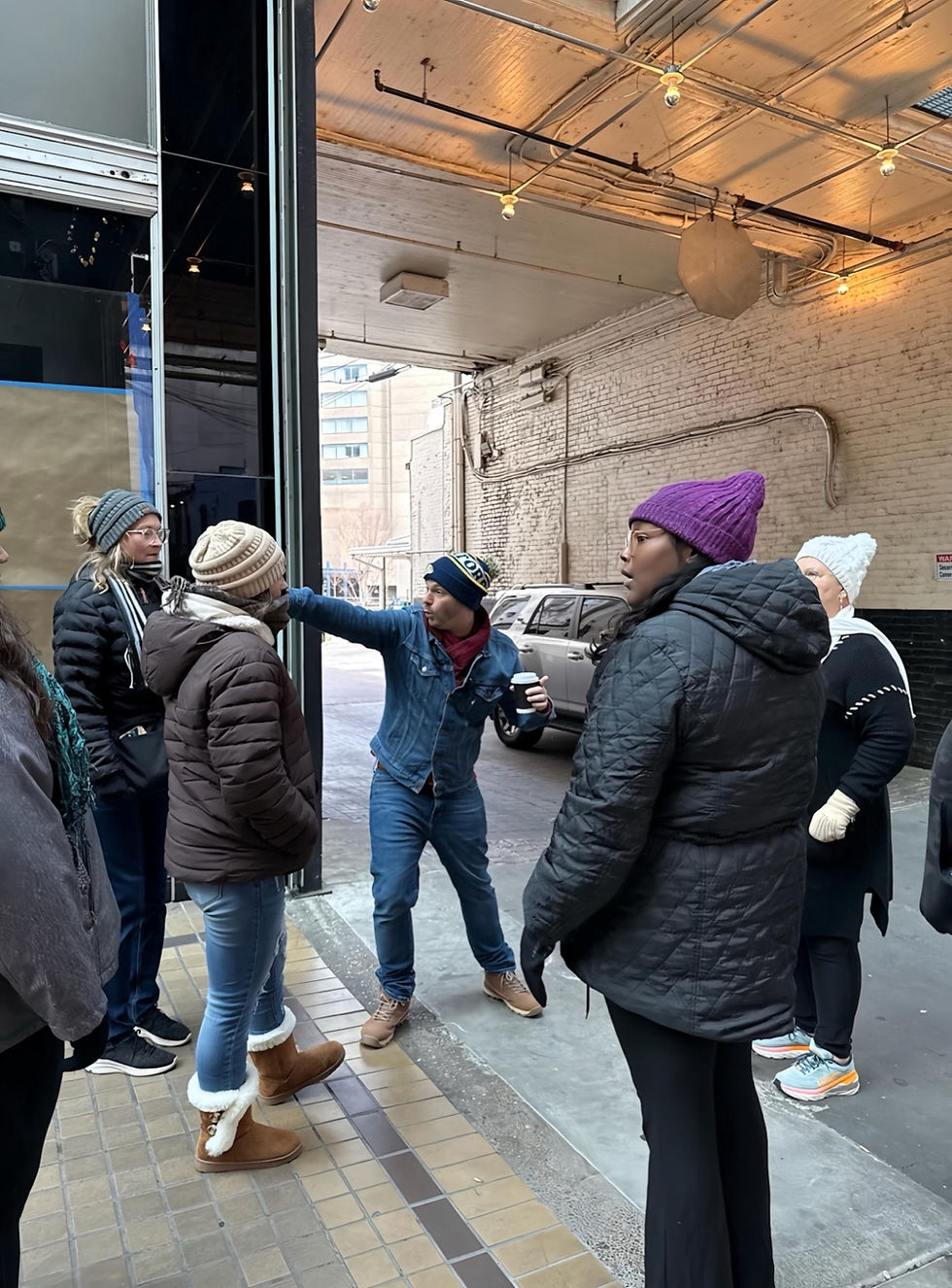
Here is my pitch, and it is a simple one. The walkable heart of Nashville is exactly the part worth slowing down for, and the best way to understand it is to walk it with someone who knows the stories behind every door. That is the whole idea behind our Nashville walking tour.
It is about ninety minutes on flat downtown sidewalks, meeting at the Grand Lodge of Tennessee steps just off Broadway, and it covers the Ryman, Printer's Alley, Broadway, and the riverfront without you ever needing a car. Still deciding how to see the city? Our honest breakdown of a Nashville walking tour versus a bus tour will help you choose. Lace up comfortable shoes and come meet me downtown.
Paul Whitten is the founder of Nashville Adventures, a veteran-owned walking tour company in Music City. A US Army veteran who served in Afghanistan and a former Peace Corps volunteer in Armenia, Paul is a Nashville historian who spends most of his week on these sidewalks. Read more on his author page.