Haunted Nashville: Inside the Old Tennessee State Prison's Dark History

Updated: Aug 14
By Briley Bell

I've walked a lot of haunted ground in this city, but nothing sits with me quite like the haunted Tennessee State Prison. It looks like a castle from the road, all stone towers and rusted gates off Cockrill Bend in West Nashville. What happened inside those walls for nearly a century is a different story entirely, and it's one that still finds its way into the accounts of anyone who's set foot back there since.
A Prison Built to Be Modern
The prison opened in 1898, modeled after New York's Auburn Penitentiary and built largely by convict labor. On paper, it was considered progressive for its time, even humane by the standards
of that era. That reputation didn't last long. The building was designed to hold 800 people. On opening day, it took in 1,403 prisoners. Overcrowding was baked into the place from the very first morning. Sitting high on a bluff over the Cumberland River, the structure earned nicknames over the decades that tell you plenty on their own: The Wall, Old Red Top, The Castle. From a distance it's almost beautiful. Up close, once you know what happened there, it's something much darker and disturbing.
Nearly a Century of Mistreatment

I don't use the word "mistreatment" lightly, and I don't think the prison's own history gives me much choice.
A 1982 Tennessean article, written amid growing scrutiny of the state's correctional system, documented young inmates being whipped for offenses as minor as "talking in shop."
Warden Glenn Swafford took over in 1915 and spent nearly 40 years running the facility through fear and physical punishment, earning it the grim nickname "Swafford's Graveyard" among those who served time there.
Tuberculosis and influenza outbreaks tore through the overcrowded population more than once.
Solitary confinement cells held men in small, lightless spaces for extended stretches, a practice known even then to break people down mentally.
In 1938, a group of inmates set fire to part of the prison in protest of the abuse and starvation they were enduring.
By the 1970s and 80s, conditions had gotten bad enough that courts started describing the facility as unfit for human habitation.
Old Sparky

If there's one detail that sums up the weight of this place, it's the electric chair. Installed the same year the prison opened, it became known to inmates and staff as "Old Sparky." Julius Morgan was the first man executed in it, on July 13, 1916, after his final appeal for clemency was denied. According to a Nashville Scene retrospective on the chair's history, the first jolt of electricity didn't kill him, and a second had to be sent through before he was pronounced dead. That detail alone tells you something about how imprecise this method of execution really was.
According to that same retrospective, 125 men were executed in the chair between Morgan's death and 1960, an average of roughly three men a year for over four decades. The executions themselves became something of a public spectacle in the early 20th century, covered in detail by newspapers across the state. Small town papers ran accounts of a condemned man's final words and last meal with the same interest they'd give a courthouse trial. The chair itself wasn't retired after 1960 either. It sat unused for decades before Tennessee brought it back into service in 2018 at a different facility, built in part from wood salvaged from the original gallows that came before it. That's a strange kind of continuity, a single object connecting executions carried out more than a century apart.
Why It Finally Closed
A federal judge shut the prison down in 1992, ruling that conditions there violated basic constitutional protections. By then, the building had already outlived most of the systems meant to fix it. James Earl Ray, convicted of assassinating Martin Luther King Jr., was held here for a stretch of his sentence before eventually being transferred to Brushy Mountain State Prison in East Tennessee, where he was later stabbed by fellow inmates. That incident happened at Brushy Mountain, not here, though the two facilities get mixed up in a lot of retellings.
After the prison closed, the building found a strange second life as a filming location. The Green Mile, Ernest Goes to Jail, and The Last Castle were all shot inside those same halls. In March 2020, a tornado tore through Nashville and collapsed large sections of the already decaying structure, leaving piles of brick scattered across the compound.
Haunted Nashville: What People Report Today
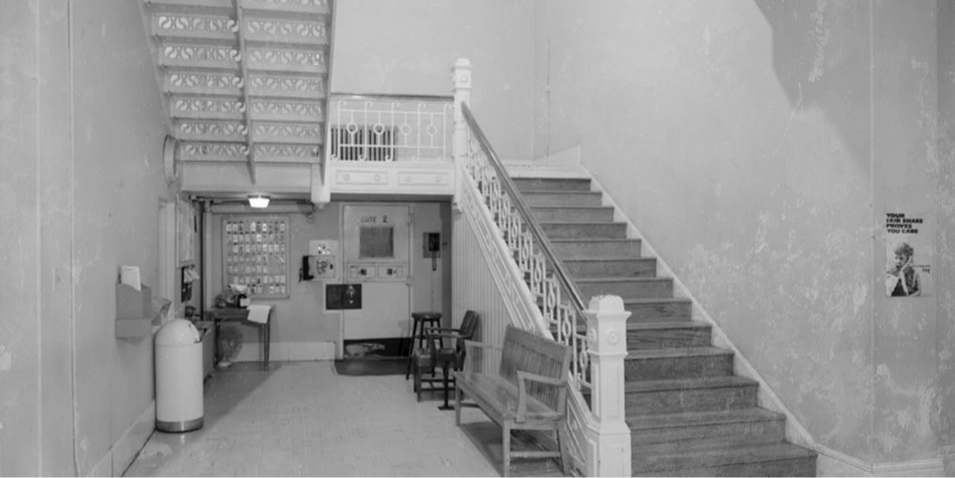
The prison has sat mostly empty since 1992, but that hasn't stopped people from reporting things inside it. Urban explorers and the handful of people granted access over the years describe a fairly consistent set of experiences, which is part of what makes the reports harder to dismiss as one-off imagination.
Cell bars clunking shut with nobody near them
Footsteps echoing down corridors that have been empty for years
Sudden cold spots in rooms with no ventilation or air conditioning, sharp enough that people notice them mid-conversation
Invisible pressure on the chest, dizziness, or nausea, concentrated most heavily near the old solitary confinement cells and underground corridors
The distant sound of boots on abandoned walkways overhead, footsteps with no one walking them
Rusted cell doors swinging open or shut on their own, with no draft or mechanical explanation
Brief glimpses of figures in cell block windows, gone by the time anyone looks twice
What strikes me most is where these reports cluster. It's not scattered evenly across the property. People consistently point to the same handful of spots, such as the old solitary confinement wing, the underground corridors, and the sections nearest where the electric chair once operated. That kind of pattern showing up across accounts from people who never spoke to each other carries more weight than a single spooky story ever could. More than 125 people are believed to be buried on the prison grounds, most in unmarked graves from decades when unclaimed remains simply stayed on site. Between that, the sheer number of executions carried out inside, and nearly a century of documented mistreatment, it's not hard to understand why so many people walk away from this place saying it feels different than anywhere else in the city. Some places hold onto quiet history. This one feels like it's still holding its breath.
Want More Stories Like This?
Do you like paranormal stories? If history like this gets under your skin, you're exactly who our ghost tours are built for. We love digging into the dark side of this city's past just as much as the music and the mayhem, and downtown Nashville has plenty of its own history worth losing sleep over. If that's the kind of story you want to hear more of, come walk with us. Nashville Adventures runs walking tours through downtown Nashville and beyond, and there's always another story waiting on the sidewalk. Book your tour at Nashville Adventures.


Briley Bell Briley Bell has built a life around Nashville's two great obsessions: its music and its ghosts. By night, she leads Nashville Adventures' ghost tours through the city's haunted corners, spinning stories of Civil War soldiers, restless spirits, and the kind of history that doesn't stay buried. By day, she's an independent artist with a sound that's all her own. Her music has the same quality as her storytelling: it pulls you in, holds you still, and leaves you thinking about it longer than you expected.
Check out her music and follow her socials: Click Here


